Telemedicine represents an impressive potential to transform health care delivery. Clinical applications of telemedicine have developed rapidly.
Telehealth solutions can remove the need to leave work or find childcare for an in-person visit, safeguard a patient from travel-related exposure to germs and reduce hospital length of stay.
Telemedicine provides an efficient means of connecting with doctors and healthcare providers, saving time, money and stress in the process. Furthermore, this service allows patients from any location in the world to communicate with their doctors from a convenient interface – perfect for rural residents having trouble accessing quality healthcare.
Manage your health with ease using any computer, tablet or smartphone – from video chatting with doctors and health care providers via video to using text message to ask them questions, you have all the options at your fingertips to stay healthy. Plus you can bring a family member who lives far away along for the virtual visit so they can hear and take notes if desired!
Many medical experts endorse the use of telemedicine due to its efficiency and cost-efficiency. Telemedicine reduces travel-related expenses while helping healthcare providers provide care at an economical price point for more patients at once. Telemedicine appointments can especially come in handy for people living with chronic diseases that need regular follow up appointments.
Virtual visits were especially valuable during the COVID-19 pandemic, when many could not travel due to illness and those without access to transportation were unable to afford hotel stays; they provided relief for both parties involved as telehealth visits with Johns Hopkins doctors and other providers skyrocketed during this period.
Telemedicine users tend to be happier with their care, reporting easier symptom management. Furthermore, virtual appointments allow doctors to follow your progress with treatment plans more easily than physical ones.
As technology for telemedicine improves, its popularity will likely grow and become part of healthcare in general. Telemedicine services may include vaccinations and screenings as well as counseling services for depression or anxiety. Furthermore, specialized care such as psychiatry or cardiology could even be utilized if patients cannot reach their usual primary care provider directly.
Telehealth refers to the use of digital information and communication technologies (DICT) to remotely access health care services and manage your own healthcare remotely. These devices include computers and mobile devices like smartphones, tablets, or even smartwatches. Telehealth can be used by nurses or other health care professionals; you can even use it yourself! By using it with your doctor you can receive health advice or recommendations, as well as medical tests like blood work over the phone or online – especially useful in rural areas! It can even keep you safer during an outbreak such as COVID-19!
Telemedicine may be increasingly popular, yet some uncertainties remain about its efficacy and cost-effectiveness. There may also be technical, clinical and organizational hurdles preventing its easy adoption – issues compounded by financial concerns in an economy experiencing economic uncertainty.
Telemedicine is a broad term, with numerous definitions available that vary based on whether they focus on applications or technologies underlying telemedicine; however, three key elements can often be found among all definitions: information or telecommunication technologies, geographic separation among participants, and medical or health care uses.
Telemedicine refers to all forms of remote health care services that do not involve doctor-patient interactions directly. It includes diagnostic and treatment services as well as post-procedure monitoring.
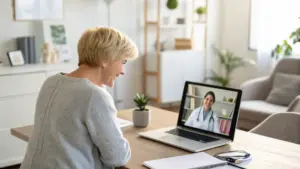
Telemedicine once required costly equipment and sophisticated videoconferencing software; nowadays most services are provided from desktop computers equipped with standard web cameras and secure patient portals – this ensures that private information remains safe while doctors still have access to patients’ records.
Telemedicine was instrumental during the COVID-19 pandemic. People could stay home while still receiving care from their physicians via video call. Telemedicine prevented many cases from spreading and prevented needless trips to an emergency room; but it should not be used as an excuse for neglecting health; use it alongside regular doctor visits for maximum effectiveness.
Telemedicine offers an ideal alternative for patients who find doctor’s offices intimidating, such as those suffering from white coat syndrome. Furthermore, it’s also ideal for people living far away from health care facilities – something which comes in particularly handy during a pandemic when physical contact may not be safe.
Recurring visits to the physician can be costly and inconvenient, but with telemedicine it can become less of a strain and more cost-effective. Patients can access doctors safely while giving doctors all of the information necessary for treating patients effectively.
Telemedicine services require only a smartphone or tablet equipped with a camera and secure app to connect to an online medical database, while others utilize more advanced technologies, like virtual reality glasses that enable physicians to see the patient’s environment more fully and provide more precise feedback. But regardless of this technology’s advancements, it remains important to remember that telemedicine should never replace face-to-face consultations.
Telemedicine may not be suitable for treating severe mental illnesses; however, it’s an effective way of managing chronic conditions, like diabetes, by providing regular check-ins and encouraging patients to take control of their own care.
Telemedicine also enables healthcare providers to collaborate. For instance, dentists and doctors can collaborate on taking photographs of teeth and dental parts prior to transmitting them for assessment by other providers – this enables doctors to quickly evaluate any issues or prescribe treatments as quickly as possible.
Telemedicine also allows family members to participate in visits, which is particularly helpful for patients needing extra reassurance and support. Furthermore, telemedicine helps patients avoid unnecessary hospitalizations by decreasing time spent at home.
Telemedicine can also be utilized for other medical issues, including discussing and treating patient symptoms via videoconferencing with their physician before prescribing medication or referring them to specialists. Furthermore, telemedicine can also be used to detect and treat long-term disorders like hypertension or digestive diseases as well as remotely monitor a patient’s blood pressure with the use of pulsometers or blood pressure cuffs.
Patients who use telemedicine report high levels of satisfaction with its convenience and effectiveness. Telemedicine allows them to remain in touch with their clinicians without waiting for an in-person appointment, which helps better manage chronic conditions. Telemedicine increases access to healthcare for rural communities as well as making second opinions easier – however it remains unknown whether telemedicine improves outcomes more than in-person care does.
Telemedicine systems are an amalgamation of information and communications technologies that enable patients to interact with their physicians remotely via electronic audio or visual means, in an effort to facilitate remote consultation. They have the potential to transform healthcare significantly; potentially even replacing personal consultations that have long served as the cornerstone of care delivery.
Telemedicine’s development has been driven by economic considerations. Managed care plans see it as a means of centralizing expertise, cutting costs and supporting primary care physicians. Academic medical centers experiencing declining revenue or being excluded from local managed care networks have taken to using telemedicine as a marketing strategy for distant markets; freestanding specialty groups and multiorganizational medical consortia have also begun exploring its use.
Telemedicine may have many advantages, yet it still presents unique challenges. Telemedicine uses complex information and communications technologies which may be costly to develop or maintain. Furthermore, measuring its efficacy may prove challenging.
Telemedicine applications exist across a range of fields, with remote clinical health care being its most prominent application. Teleradiology, telemental health and echocardiography technologies enable physicians to diagnose and treat problems remotely while also giving patients access to doctors at home.
Telehealth care may be the ideal solution for many patients, eliminating travel time and child care arrangements to visit a clinic, plus fitting into busy lifestyles with ease. Plus, this form of treatment provides excellent ways of accessing medical advice when it’s not immediate.